HookMesh vs qtrl.ai
Side-by-side comparison to help you choose the right tool.

Enhance your SaaS with reliable webhook delivery, automatic retries, and a self-service portal for seamless integration.
Last updated: February 28, 2026

qtrl.ai
qtrl.ai empowers QA teams to scale testing with AI agents while ensuring complete control and governance throughout.
Last updated: March 4, 2026
Visual Comparison
HookMesh
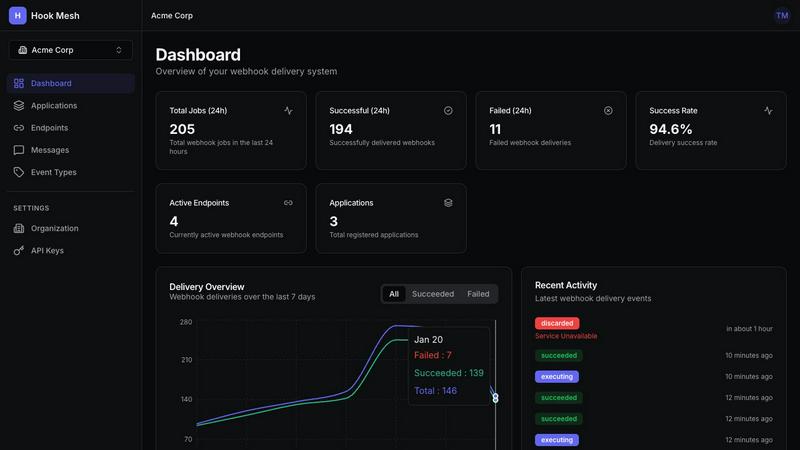
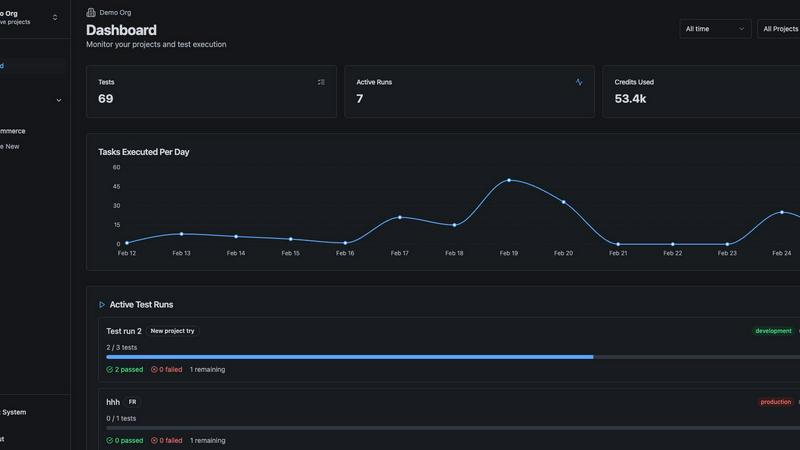
qtrl.ai
Feature Comparison
HookMesh
Reliable Delivery
HookMesh guarantees that webhooks are never lost, thanks to its sophisticated delivery mechanisms. With automatic retries and exponential backoff strategies, the platform ensures that messages are retried for up to 48 hours if initial attempts fail. This feature is crucial for maintaining data integrity and ensuring that no critical event goes unreported.
Customer Portal
The self-service customer portal is a standout feature of HookMesh, offering an embeddable UI for endpoint management. Customers can easily add or modify their webhook endpoints, view comprehensive delivery logs, and replay failed webhooks with just one click. This transparency and control significantly enhance the user experience, reducing the need for support interventions.
Circuit Breaker
The circuit breaker feature automatically disables any endpoints that are consistently failing, preventing a single slow or down endpoint from impacting the entire webhook queue. Once the issue is resolved, HookMesh allows for seamless re-enablement, ensuring that your webhook delivery remains efficient and effective.
Developer Experience
HookMesh is designed with developers in mind, offering a REST API and official SDKs for JavaScript, Python, and Go. The platform's easy integration process requires only a few lines of code to get started. This streamlined developer experience allows teams to implement webhook functionality quickly and efficiently.
qtrl.ai
Autonomous QA Agents
qtrl.ai's autonomous QA agents can execute testing instructions either on demand or continuously, allowing teams to run tests at scale across various environments. These agents operate within defined rules and perform real browser execution rather than relying on simulations, ensuring accuracy and reliability in testing outcomes.
Enterprise-Grade Test Management
The platform offers a centralized repository for test cases, plans, and runs, providing complete traceability and audit trails. With support for both manual and automated workflows, qtrl.ai is specifically designed to meet compliance requirements and facilitate thorough oversight of QA processes.
Progressive Automation
With qtrl.ai, teams can start with human-written test instructions and gradually transition to AI-generated tests as they become comfortable with automation. The platform intelligently suggests new tests based on coverage gaps, enabling teams to continually enhance their testing strategies while maintaining full review capabilities.
Adaptive Memory
qtrl.ai features an adaptive memory that builds a living knowledge base of an application over time. This memory learns from exploration, test execution, and encountered issues, allowing for smarter, context-aware test generation that becomes increasingly effective with each interaction.
Use Cases
HookMesh
E-Commerce Transactions
In the e-commerce sector, businesses rely heavily on webhooks to process transactions and order updates. HookMesh ensures that critical events like order completions and payment confirmations are delivered reliably, enhancing customer satisfaction and operational efficiency.
SaaS Integrations
For SaaS products that integrate with multiple services, HookMesh provides a robust solution for managing webhooks. By simplifying endpoint management and ensuring reliable delivery, HookMesh allows SaaS providers to focus on delivering value rather than troubleshooting webhook issues.
Real-Time Notifications
Businesses that require real-time notifications, such as alerts for system status changes or performance metrics, benefit from HookMesh's automatic retry and logging features. This guarantees that all stakeholders receive timely updates, fostering proactive decision-making.
API Event Management
HookMesh is ideal for managing events in applications that utilize APIs. With its reliable delivery and self-service capabilities, developers can effectively orchestrate event-driven architectures without the overhead of maintaining complex webhook systems.
qtrl.ai
Product-Led Engineering Teams
Teams focused on product-led development can utilize qtrl.ai to streamline their QA processes, ensuring high-quality outputs while maintaining the speed of development. The platform allows for structured test management and intelligent automation that aligns with rapid product iterations.
QA Teams Transitioning from Manual Testing
For QA teams looking to move beyond manual testing, qtrl.ai provides a seamless transition by combining existing manual processes with advanced automation. This empowers teams to enhance efficiency while maintaining oversight and control over testing activities.
Companies Modernizing Legacy Workflows
Organizations seeking to modernize their legacy QA workflows can leverage qtrl.ai to integrate AI-driven testing with their existing systems. The platform's adaptability allows companies to evolve their QA practices without overhauling their entire infrastructure.
Enterprises Requiring Governance and Traceability
Enterprises that prioritize compliance and traceability can trust qtrl.ai to provide comprehensive audit trails and governance features. This ensures that all testing activities are documented and accessible, meeting the stringent requirements of regulated industries.
Overview
About HookMesh
HookMesh is a cutting-edge platform tailored to revolutionize webhook delivery for modern Software as a Service (SaaS) products. As businesses increasingly rely on webhooks for real-time communication and data exchange, the challenges of managing these hooks in-house can become overwhelming. HookMesh mitigates these complexities, providing an all-in-one solution that includes automatic retries, circuit breakers, and advanced debugging tools. Designed for developers and product teams, HookMesh allows organizations to concentrate on enhancing their core offerings rather than getting tangled up in the technical intricacies of webhook management. With a battle-tested infrastructure that guarantees reliable delivery, businesses can ensure that critical events reach their intended destinations without fail. Additionally, HookMesh features a self-service portal that empowers customers to manage their endpoints, view logs, and effortlessly replay failed webhooks with a single click. This innovative approach not only streamlines webhook handling but also elevates the overall customer experience, making HookMesh an essential tool for any organization looking to optimize their webhook strategy.
About qtrl.ai
qtrl.ai is a cutting-edge quality assurance (QA) platform tailored for software teams aiming to enhance their testing capabilities without compromising on control or governance. This innovative solution merges robust test management with advanced AI-driven automation, creating a centralized environment where teams can effectively organize test cases, plan test runs, and trace requirements to ensure comprehensive coverage. With real-time dashboards, qtrl.ai provides vital insights into testing progress, pass rates, and potential risks, making it indispensable for engineering leads and QA managers. By offering a progressive AI layer, qtrl.ai allows teams to initiate their journey with manual test management and gradually adopt autonomous agents that can generate and execute tests based on simple English instructions. This approach ensures a smooth transition from traditional testing methods to an efficient, intelligent QA process, catering to product-led engineering teams, QA groups transitioning from manual processes, organizations modernizing legacy workflows, and enterprises demanding strict compliance and audit trails. Ultimately, qtrl.ai's mission is to synchronize the pace of manual testing with the complexities of traditional automation, delivering a reliable pathway to faster and smarter quality assurance.
Frequently Asked Questions
HookMesh FAQ
What kind of events can I send using HookMesh?
HookMesh supports any JSON payload, allowing you to send a wide range of events including transaction updates, notifications, and API callbacks. This flexibility makes it suitable for various applications.
How does HookMesh ensure reliable webhook delivery?
HookMesh employs automatic retries, exponential backoff, and circuit breaker mechanisms to ensure that webhooks are reliably delivered. This comprehensive approach minimizes the risk of lost messages and enhances overall performance.
Is there a limit on the number of webhooks I can send?
Yes, HookMesh offers different pricing tiers with varying limits on the number of webhooks. The free tier includes up to 5,000 webhooks per month, making it accessible for small projects and startups.
How can my customers manage their webhook endpoints?
Customers can use the embedded self-service portal provided by HookMesh to manage their webhook endpoints. This portal enables them to add, modify, and view logs for their endpoints, as well as replay any failed webhooks instantly.
qtrl.ai FAQ
How does qtrl.ai ensure test quality and reliability?
qtrl.ai maintains test quality through real browser execution, comprehensive traceability, and a structured approach to both manual and automated testing. The platform allows teams to review and refine tests at every stage, ensuring accuracy and reliability.
Can qtrl.ai integrate with existing tools and workflows?
Yes, qtrl.ai is designed to work with your existing tools and workflows. It supports CI/CD pipeline integration and provides continuous quality feedback loops, making it compatible with various development environments.
What kind of teams benefit the most from using qtrl.ai?
qtrl.ai is particularly beneficial for product-led engineering teams, QA teams scaling beyond manual testing, companies modernizing legacy QA workflows, and enterprises that require strict governance and traceability in their quality assurance processes.
How does qtrl.ai handle sensitive data during testing?
qtrl.ai includes features to manage sensitive data securely. It utilizes per-environment variables and encrypted secrets, ensuring that sensitive information is never exposed to the AI agents, thus maintaining data integrity and security during testing.
Alternatives
HookMesh Alternatives
HookMesh is a cutting-edge platform designed for reliable webhook delivery, catering primarily to SaaS businesses. It simplifies the complexities of webhook management, allowing developers and product teams to focus on their core offerings while ensuring seamless and dependable event delivery. Users often seek alternatives to HookMesh due to a variety of reasons including pricing concerns, specific feature requirements, or compatibility with existing platforms. When considering alternatives, it's essential to evaluate aspects such as reliability, ease of use, customer support, and integration capabilities to ensure that the chosen solution meets their unique needs. Selecting the right webhook delivery service is crucial for maintaining a smooth operational flow in any SaaS product. Users should prioritize features like automatic retries, transparency in delivery tracking, and the ability to manage webhook endpoints efficiently. A robust customer support system and a user-friendly interface are also vital factors that can greatly enhance the overall experience when managing webhooks.
qtrl.ai Alternatives
qtrl.ai is a cutting-edge QA platform that empowers software teams to enhance their quality assurance processes while maintaining control and governance. By integrating enterprise-grade test management with advanced AI automation, qtrl.ai offers a centralized hub for organizing test cases, planning test runs, and tracking key quality metrics through real-time dashboards. This holistic approach ensures visibility and mitigates risks for QA managers and engineering leads. Users often seek alternatives to qtrl.ai for a variety of reasons, including pricing concerns, specific feature requirements, or compatibility with existing platforms. When evaluating alternatives, it's crucial to consider factors such as the scalability of the solution, the level of AI integration, ease of use, and the ability to maintain governance and control over testing processes. A comprehensive understanding of your team's needs will guide you in selecting the best fit for your quality assurance objectives.