diffray vs Skene
Side-by-side comparison to help you choose the right tool.

diffray
Diffray uses 30 AI agents to catch real bugs in your code, not just nitpicks.
Last updated: February 28, 2026

Skene transforms your codebase into a PLG engine, driving seamless onboarding and retention through automated growth.
Last updated: February 28, 2026
Visual Comparison
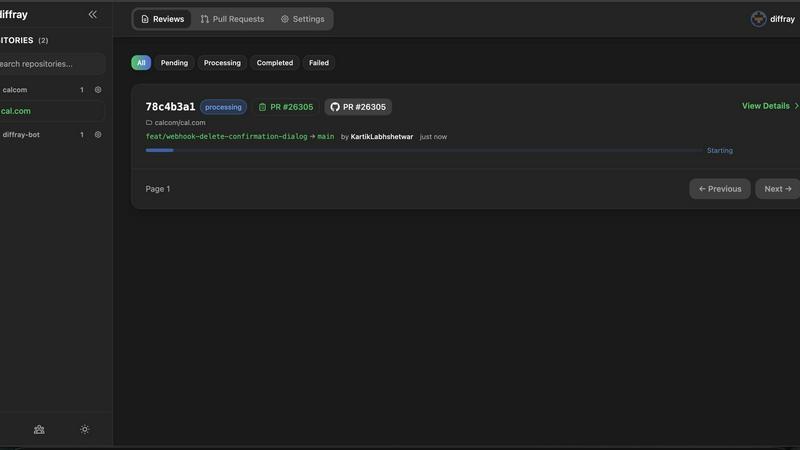
diffray
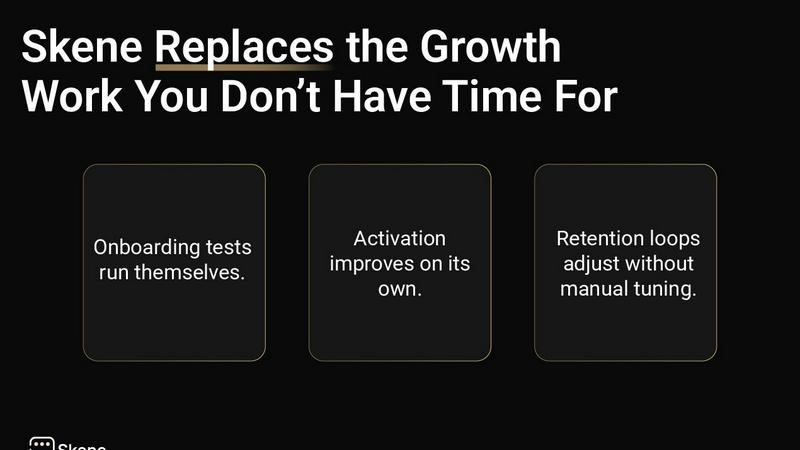
Skene
Feature Comparison
diffray
Multi-Agent Specialist Architecture
diffray's foundational feature is its team of over 30 specialized AI agents, a critical upgrade from generic, single-model reviewers. Each agent is a dedicated expert in a specific domain, including security vulnerability detection, performance anti-patterns, bug logic, SEO best practices for web code, and data consistency checks. This specialization is essential for eliminating irrelevant style nitpicks and false positives, ensuring every piece of feedback is precise, actionable, and originates from a virtual expert in that exact field.
Full Codebase Context Awareness
This is the indispensable engine that separates diffray from speculative tools. The platform performs a deep, codebase-aware investigation by analyzing your entire repository—not just the diff. It understands your project's existing patterns, custom libraries, and architectural decisions. This critical context allows diffray to identify issues like duplicate utility functions, API type drift, and problematic database operations that other tools miss, while respecting and avoiding commentary on patterns your team has already standardized.
Noise-Free, Actionable Feedback
diffray is engineered with a zero-tolerance policy for noisy, ineffective feedback. By leveraging its specialist agents and deep context, the platform filters out irrelevant suggestions and false positives that plague traditional AI reviewers. The result is a clean, prioritized list of findings that developers can immediately trust and act upon. This direct focus on high-signal issues is an absolute necessity for maintaining developer trust and accelerating the review cycle without distraction.
Enterprise-Grade Security & Integration
Designed for serious engineering teams, diffray integrates seamlessly into your existing development workflow. It connects directly with GitHub, GitLab, and other version control systems, providing automated, inline comments on pull requests. The platform operates with a commitment to security, ensuring your code is analyzed in a protected environment. This seamless, secure integration is a must-have for maintaining velocity and code quality without introducing friction or risk.
Skene
Automated User Flow Optimization
Skene continuously analyzes user interactions within your product to identify friction points that hinder user activation. By automatically generating and testing optimized user flows, Skene ensures that onboarding processes are effective, making the path to activation smoother and more intuitive.
Contextual Insights from Your Codebase
Leveraging signals directly from your codebase, Skene provides rich contextual insights that facilitate informed decision-making. This feature allows developers to understand user behavior in real time, ensuring that adjustments and enhancements are data-driven and relevant to the current state of the product.
Rapid Setup and Integration
Getting started with Skene is incredibly fast—setup takes less than 60 seconds. Simply connect your GitHub or GitLab repository, and Skene automatically analyzes your codebase to generate tailored PLG flows, eliminating the need for extensive manual input or complicated integrations.
Outcome-Based Pricing
Skene's pricing model is designed to be fair and aligned with user success. You only pay when customers successfully complete their onboarding journey, making it a cost-effective solution for startups. The free tier includes five completed onboardings per month, with additional bundles available for growth.
Use Cases
diffray
Accelerating Pull Request Reviews for Velocity
For teams under pressure to ship features faster, diffray is an essential accelerator. By automatically providing precise, context-aware reviews on every pull request, it slashes the average review time from 45 minutes to just 12 minutes. Developers receive immediate, expert-level feedback on security, bugs, and performance, allowing human reviewers to focus on higher-level architecture and design. This use case is critical for any team looking to reduce cycle time and increase deployment frequency without sacrificing quality.
Enforcing Code Quality & Best Practices at Scale
As engineering teams and codebases grow, consistently enforcing quality and best practices becomes a monumental challenge. diffray acts as an always-on, expert senior engineer on every team. It automatically enforces coding standards, identifies anti-patterns, and ensures consistency across the entire repository. This is a necessity for large enterprises and scaling startups to maintain a high-quality, sustainable codebase and effectively onboard new developers.
Proactive Security & Vulnerability Prevention
Security cannot be an afterthought. diffray's dedicated security agents proactively scan every code change for vulnerabilities like SQL injection, XSS, insecure dependencies, and secret key exposure. By catching these issues at the pull request stage—within the full context of the application—it shifts security left and prevents critical flaws from ever reaching production. This use case is an absolute must for any organization serious about building secure software from the ground up.
Eliminating Technical Debt & Bug Patterns
Technical debt and recurring bug patterns silently cripple productivity. diffray's investigative agents are specifically tuned to identify these insidious issues, such as duplicate code, non-atomic operations, memory leaks, and type inconsistencies. By flagging these patterns early and providing concrete fixes, diffray helps teams systematically pay down debt and break the cycle of recurring bugs. This is essential for maintaining long-term development velocity and system reliability.
Skene
Improving Onboarding Efficiency
Indie developers can utilize Skene to enhance their onboarding processes, providing new users with a seamless introduction to the product. By optimizing user flows based on real-time data, developers can significantly reduce the time it takes for users to achieve their first success within the product.
Driving Feature Adoption
Startups can leverage Skene to drive feature adoption by identifying which features are underutilized and creating targeted user flows that encourage engagement. This ensures that users are aware of and can easily access valuable features, ultimately enhancing the overall user experience.
Enhancing Retention Strategies
By continuously analyzing user behavior and identifying drop-off points, Skene helps startups refine their retention strategies. This proactive approach allows businesses to implement timely interventions that keep users engaged and reduce churn.
Streamlining Product Development
With Skene automating growth processes, developers can focus on building and improving their product rather than managing growth initiatives manually. This streamlined approach allows teams to innovate faster and respond to user needs more effectively.
Overview
About diffray
diffray is the non-negotiable, multi-agent AI code review platform engineered to eliminate the crippling noise and ineffectiveness of traditional single-model tools. For development teams who are serious about code quality, security, and shipping velocity, diffray is an absolute necessity. It fundamentally transforms the code review process by deploying a dedicated team of over 30 specialized AI agents, each an expert in a critical domain like security vulnerabilities, performance bottlenecks, bug patterns, and data consistency. This architectural shift moves beyond generic, speculative feedback to deliver precise, actionable insights that developers can immediately trust and act upon. The platform's core, indispensable value is its deep codebase-aware investigation. diffray analyzes your entire repository context to understand your project's established patterns, libraries, and architectural decisions. This allows it to catch critical, context-sensitive issues that other tools completely miss—such as duplicate utilities, type drift, and non-atomic database operations—while intelligently avoiding redundant suggestions about patterns your team already uses. The result is a transformative developer experience with proven outcomes: an 87% reduction in false positives, 3x more real bugs caught, and PR review time slashed from an average of 45 minutes to just 12 minutes per week. diffray is a must-have for any engineering team, from fast-moving startups to large-scale enterprises, that demands intelligent, context-aware code review.
About Skene
Skene is a revolutionary, fully automated Product-Led Growth (PLG) iteration engine specifically designed for indie developers and early-stage startups. This innovative platform empowers users to accelerate their product growth without the need for a dedicated growth team. By continuously optimizing crucial processes such as onboarding, activation, and retention, Skene harnesses insights derived from customer interactions to significantly enhance the user experience. It intelligently observes user actions to pinpoint friction points that lead to activation drop-offs and automatically creates and tests improved user flows based on these insights. The result is a self-optimizing onboarding process that ensures smoother activation paths and evolves long-term retention strategies over time. With Skene, developers can focus their efforts on building exceptional products while the platform takes charge of growth, serving as a "growth team in a box" that elevates PLG strategies without the need for additional hires.
Frequently Asked Questions
diffray FAQ
How is diffray different from other AI code review tools?
diffray is fundamentally different due to its multi-agent specialist architecture and deep codebase awareness. Generic tools use a single, general-purpose AI model that often floods reviews with irrelevant style suggestions and false positives. diffray uses over 30 AI agents, each a dedicated expert in domains like security, performance, and bugs. More critically, it analyzes your entire repository for context, allowing it to provide precise, actionable feedback that respects your established patterns and catches issues other tools miss.
What kind of issues can diffray actually find?
diffray's specialist agents are designed to find critical, substantive issues that impact code quality, security, and performance. This includes security vulnerabilities (e.g., injection flaws, insecure data handling), performance bottlenecks (e.g., N+1 queries, inefficient algorithms), logical bugs and anti-patterns, data consistency risks, duplicate code, and deviations from established project-specific best practices. It intentionally avoids superficial style nitpicks to focus on what matters most.
How does the codebase-aware analysis work?
When you integrate diffray with your repository, it performs an initial, secure analysis to understand your project's architecture, existing code patterns, libraries, and conventions. For every subsequent pull request, it evaluates the proposed changes within this full context. This allows it to determine if a suggested pattern already exists elsewhere, if a change could cause type drift in your system, or if a new function duplicates existing utility code, ensuring feedback is always relevant and intelligent.
Is diffray suitable for both small startups and large enterprises?
Absolutely. diffray is an essential tool for any team serious about code quality. For fast-moving startups, it acts as a force multiplier, providing expert-level review capabilities without the need to hire a large senior team, enabling them to ship faster and more securely. For large enterprises, it ensures consistency, security, and best practices are enforced automatically across hundreds of developers and complex, monolithic codebases, making it a non-negotiable component of the development lifecycle.
Skene FAQ
What is PLG software?
PLG (Product-Led Growth) software enables users to discover value in your product independently, without the need for sales or customer success teams. It automates the user journey, guiding users toward activation, driving feature adoption, and enhancing retention through the product itself.
How is Skene different from traditional customer experience software?
Unlike traditional customer experience tools that require manual tour creation and maintenance, Skene reads your codebase to automatically generate onboarding, analytics, and lifecycle automation. When you push code, everything updates seamlessly, eliminating the need for constant adjustments.
How long does it take to set up?
Setting up Skene is extremely quick, taking less than 60 seconds. You simply connect your GitHub or GitLab repository with read-only access, and Skene automatically analyzes your codebase to generate personalized PLG flows, requiring no code changes or API modifications.
Is my code secure with Skene?
Yes, your code is secure with Skene. The platform only requires read-only access to your repository, and all analysis occurs in a secure, isolated environment, ensuring that your intellectual property remains protected.
Alternatives
diffray Alternatives
diffray is an essential multi-agent AI code review platform in the development category, engineered to catch real bugs with over 30 specialized AI agents. It is a must-have for teams serious about code quality, security, and velocity. Users may seek alternatives for various critical reasons. These include budget constraints, specific feature requirements not covered by a platform, or integration needs with their existing development stack and workflow. The search for a different tool is often driven by the absolute necessity to find the right fit for a team's unique operational demands. When evaluating any alternative, it is imperative to prioritize a few non-negotiable criteria. You must look for deep, context-aware analysis that understands your full codebase to avoid noise. Specialized expertise across security, performance, and best practices is essential, as is a proven reduction in false positives that builds developer trust and accelerates review cycles.
Skene Alternatives
Skene is an advanced automated Product-Led Growth (PLG) iteration engine that focuses on enhancing onboarding and retention for indie developers and early-stage startups. By transforming your codebase into a growth engine, Skene allows teams to optimize their products without the need for dedicated growth personnel. Users often seek alternatives to Skene for various reasons, including pricing, specific feature sets, or the need for compatibility with different software platforms. When choosing an alternative, it is essential to consider aspects such as ease of integration, the depth of analytics provided, and the level of automation in user flow optimization. Selecting the right solution can significantly impact your product's growth trajectory. Look for platforms that offer real-time analytics, seamless integration with your existing codebase, and robust features to facilitate continuous optimization. A well-rounded alternative should not only meet your immediate needs but also support long-term growth strategies as your user base evolves.