
CloudBurn vs RocketShare
Side-by-side comparison to help you choose the right tool.

CloudBurn
CloudBurn prevents costly AWS surprises by providing instant cost estimates for infrastructure changes in every pull.
Last updated: March 1, 2026

RocketShare
Share files with total privacy using encryption we cannot access.
Last updated: March 4, 2026
Visual Comparison
CloudBurn
RocketShare
Feature Comparison
CloudBurn
Real-Time Cost Estimates
CloudBurn provides precise AWS cost estimates during the code review process. This feature allows developers to see the financial impact of their changes before deployment, making it easier to adjust and optimize infrastructure costs.
Automated Cost Analysis
With CloudBurn, every pull request is automatically analyzed for cost implications. This feature eliminates the need for manual estimation and allows teams to catch potential budget overruns early, ensuring financial accountability at every stage of the development process.
Seamless GitHub Integration
CloudBurn integrates effortlessly with GitHub, requiring no complicated setups or permissions. This feature streamlines the installation and setup process, allowing teams to focus on development rather than administrative tasks.
Detailed Cost Breakdown Reports
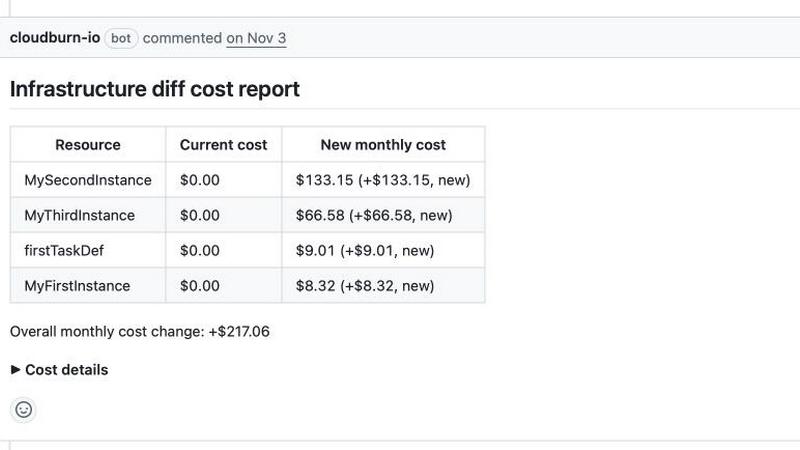
When CloudBurn analyzes a pull request, it posts a comprehensive cost report as a comment. This feature includes resource-specific cost details, allowing developers to understand exactly how each change will affect the overall budget, thus fostering a culture of cost awareness.
RocketShare
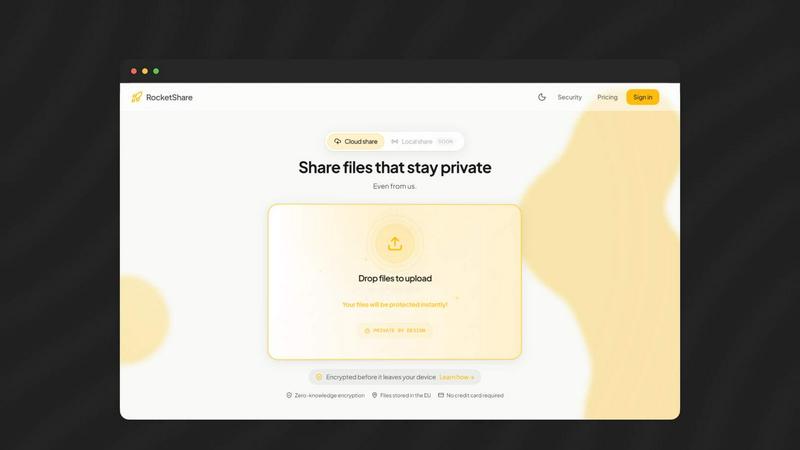
Zero-Knowledge End-to-End Encryption
This is the non-negotiable foundation of RocketShare. Every file is encrypted on your own device using a unique key before it is uploaded. Neither RocketShare's servers nor any intermediary can decrypt your data. This means your confidential documents, media, and intellectual property are fundamentally inaccessible to anyone except you and your intended recipient, making it an essential security standard.
Local Peer-to-Peer (P2P) Sharing
For the utmost in speed and privacy, RocketShare offers a local sharing mode. This feature creates a direct, encrypted connection between devices on the same network, transferring files without them ever being stored on an external server. This is a critical option for sharing extremely large files or when you require complete data sovereignty, ensuring the transfer happens entirely under your control.
Secure EU-Based Cloud Storage
When using cloud sharing, your encrypted files are stored on servers located within the European Union. This provides a vital layer of regulatory and legal protection under strict EU data privacy laws like the GDPR. Choosing a platform with known, secure geographic storage is a necessary consideration for compliance and peace of mind for global users.
Simple, Self-Serve Interface
RocketShare delivers military-grade security without the complexity. The platform is designed for immediate use with an intuitive drag-and-drop interface. There are no complicated setups or IT configurations required. This simplicity is essential, allowing teams and individuals to adopt secure practices instantly, without sacrificing productivity for protection.
Use Cases
CloudBurn
Proactive Cost Management
CloudBurn is perfect for teams looking to adopt proactive financial management principles. By providing real-time cost estimates, teams can make informed decisions that prevent budget overruns and improve overall financial health.
Infrastructure Optimization
Development teams can use CloudBurn to optimize their infrastructure choices by evaluating the cost implications of different configurations during the development phase. This leads to more efficient resource usage and significant cost savings.
Enhanced Code Review Process
Incorporating CloudBurn into the code review process ensures that cost considerations are part of the conversation. Teams can evaluate the financial impact alongside code quality, making it easier to align technical and financial goals.
Risk Mitigation in Production
CloudBurn helps mitigate the risks associated with deploying expensive resources by highlighting potential cost increases in pull requests. This allows teams to make adjustments before changes go live, reducing the likelihood of unexpected charges.
RocketShare
Legal Document Exchange
Law firms and legal professionals have a fundamental obligation to protect client confidentiality. RocketShare is essential for securely sending case files, contracts, depositions, and evidence. Its zero-knowledge encryption ensures attorney-client privilege is technically enforced, preventing any possibility of a third-party breach or access, which is a non-negotiable requirement in legal practice.
Healthcare Data Transmission
Healthcare providers and administrators must comply with stringent regulations like HIPAA. Sharing patient records, lab results, or medical imaging requires a platform that guarantees privacy by design. RocketShare's encryption-before-upload model is a critical tool for ensuring protected health information (PHI) remains secure during transfer, mitigating severe compliance and reputational risks.
Creative Asset Delivery
Photographers, videographers, and designers must protect their intellectual property and client work. Sending high-resolution galleries, video edits, or design mockups via insecure links is a significant risk. RocketShare provides a simple yet mandatory solution for delivering final assets or proofs with the assurance that work cannot be intercepted, copied, or accessed by unauthorized parties.
Internal Business Collaboration
Teams working on confidential projects, financial reports, merger details, or proprietary R&D cannot rely on standard cloud storage. RocketShare is a necessary infrastructure for internal collaboration, ensuring that sensitive strategic documents shared between departments or remote team members are protected from internal leaks and external threats at every step.
Overview
About CloudBurn
CloudBurn is an essential tool designed for engineering and FinOps teams utilizing Terraform or AWS CDK. It addresses the critical issue of reactive cloud cost management by embedding financial visibility directly into the developer workflow. Often, teams find themselves facing budget overruns only after receiving their AWS bill, discovering that costly infrastructure has already been deployed and accruing charges. CloudBurn transforms this reactive cycle by providing real-time AWS cost estimates during the code review process, ensuring changes can be made easily and safely. By automatically analyzing pull requests and posting detailed cost breakdowns as comments, it creates a crucial feedback loop that empowers developers to make informed, cost-aware decisions. Seamlessly integrating with GitHub, CloudBurn requires no complex billing setups or permissions management. For teams dedicated to managing cloud spending and practicing proactive FinOps, CloudBurn is not just a nice-to-have; it is a mandatory safeguard for infrastructure budgets, offering immediate ROI by preventing costly misconfigurations before they ever reach production.
About RocketShare
RocketShare is the essential, non-negotiable file-sharing platform for anyone who prioritizes absolute privacy. In a digital landscape rife with surveillance and data breaches, RocketShare provides a fundamental solution: the ability to share files of any size with the ironclad guarantee that no third party, including RocketShare itself, can ever access your content. This is not an optional feature; it is the core principle of its architecture. By employing a zero-knowledge encryption model, RocketShare ensures your files are encrypted directly on your device before upload. The encryption key remains solely with you, often embedded within the share link, meaning servers only handle unreadable data. This delivers enterprise-grade security in a beautifully simple, self-serve package that is a necessity for professionals handling sensitive information. With secure EU-based data storage and flexible sharing modes—both cloud-based and direct local peer-to-peer transfers—RocketShare eliminates the risk and complexity typically associated with top-tier security. It is the mandatory tool for lawyers, healthcare providers, creatives, and businesses that understand privacy is not a luxury, but a critical requirement for operation.
Frequently Asked Questions
CloudBurn FAQ
How does CloudBurn integrate with GitHub?
CloudBurn integrates seamlessly with GitHub by allowing users to install it from the GitHub Marketplace. Once installed, it analyzes pull requests automatically without the need for complex setups or additional permissions.
What tools does CloudBurn support?
CloudBurn supports both Terraform and AWS CDK, enabling teams using these infrastructure-as-code tools to obtain real-time cost estimates and manage their cloud spending effectively.
Can CloudBurn help with existing infrastructure?
Yes, CloudBurn can analyze changes to existing infrastructure through pull requests. It provides detailed cost breakdowns for modifications, allowing teams to understand the financial impact of their updates before deployment.
Is there a free trial available?
CloudBurn offers a 14-day Pro trial for users to experience its premium features without any upfront costs. Users can cancel anytime or continue using the Community plan indefinitely.
RocketShare FAQ
How does zero-knowledge encryption work with RocketShare?
Zero-knowledge encryption means your files are encrypted on your device before they leave for our servers. You hold the only decryption key, which is often part of the share link. We never have access to your key or the unencrypted data. Even if our servers were compromised, attackers would only find encrypted, unreadable files, making this model essential for true privacy.
What is the difference between Cloud Share and Local Share?
Cloud Share uploads your encrypted files to our secure EU-based servers, allowing recipients to download them at any time. Local Share (Peer-to-Peer) creates a direct, encrypted connection between your device and the recipient's device on the same network; files are transferred directly without ever being stored on our servers. The latter is a critical option for maximum speed and data sovereignty.
Where is my data stored?
When you use the Cloud Share feature, your encrypted files are stored on servers located within the European Union. This choice is intentional and necessary to provide the strong legal privacy protections afforded by EU jurisdiction and regulations like the GDPR, ensuring a higher standard of data governance.
Is a credit card required to start using RocketShare?
No, a credit card is not required to start using RocketShare. You can begin sharing files securely immediately without entering payment details. This allows you to experience the essential privacy and functionality of the platform as a necessity before committing to any paid plan, should you require one.
Alternatives
CloudBurn Alternatives
CloudBurn is a vital tool designed for engineering and FinOps teams utilizing Terraform or AWS CDK, focusing on proactive cloud cost management. It integrates seamlessly into the developer workflow, providing real-time cost estimates during the code review process, thereby preventing surprise billing from AWS. Users often seek alternatives due to various factors such as pricing, specific feature requirements, or compatibility with their existing infrastructure and platforms. When choosing an alternative to CloudBurn, it's essential to consider the automation capabilities, the level of detail in cost breakdowns, and how well the tool integrates into your development processes. Look for solutions that prioritize proactive cost management and offer a robust feedback loop to empower developers in making informed financial decisions during the development cycle.
RocketShare Alternatives
RocketShare is a secure file-sharing platform in the productivity and management category, defined by its strict zero-knowledge encryption model. This ensures complete privacy, as files are encrypted on the user's device before upload, and not even the service provider can access the content. Users may seek alternatives for various practical reasons. Common drivers include budget constraints, the need for specific collaboration features like real-time editing, integration with existing software ecosystems, or different data storage location requirements. The search often stems from finding the right balance between security, functionality, and cost for a particular use case. When evaluating other options, prioritize the core security model. Look for clear explanations of encryption—whether it's zero-knowledge or server-side. Assess storage limits, transfer speeds, and any platform restrictions. Finally, consider the user experience and whether the tool fits seamlessly into your workflow without adding complexity.