42feeds vs Miget
Side-by-side comparison to help you choose the right tool.

42feeds simplifies feed management, ensuring your product feeds are clean, compliant, and effortlessly updated across.
Last updated: February 28, 2026

Miget
Deploy unlimited services on one flat-rate plan.
Visual Comparison
42feeds
Miget
Overview
About 42feeds
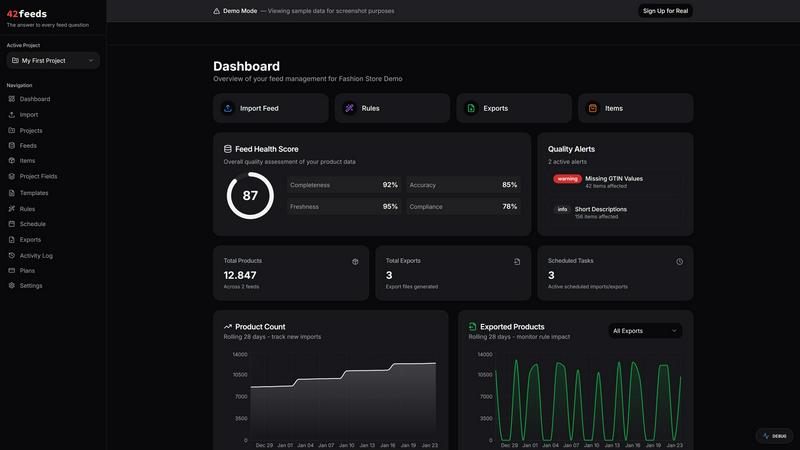
42feeds is an essential product feed management tool designed specifically for performance marketers, digital agencies, and e-commerce teams that rely heavily on advertising platforms like Google Shopping, Meta Catalogs, and Microsoft Ads. Unlike conventional feed management tools that often cater to large enterprises, 42feeds was developed with a clear focus on the needs of freelancers and small businesses. It addresses common pain points in feed management, such as inconsistent attribute mappings and small, hard-to-detect changes that can lead to broken feeds or silent product disapprovals. By providing a transparent and predictable feed logic, 42feeds empowers users to import product data, apply rule-based transformations, validate feeds against platform requirements, and export ready-to-use feeds without the complexities of black-box automation. The main value proposition lies in its ability to help teams quickly identify and resolve issues, ensuring clean data and reliable advertising feeds that keep ad accounts stable.
About Miget
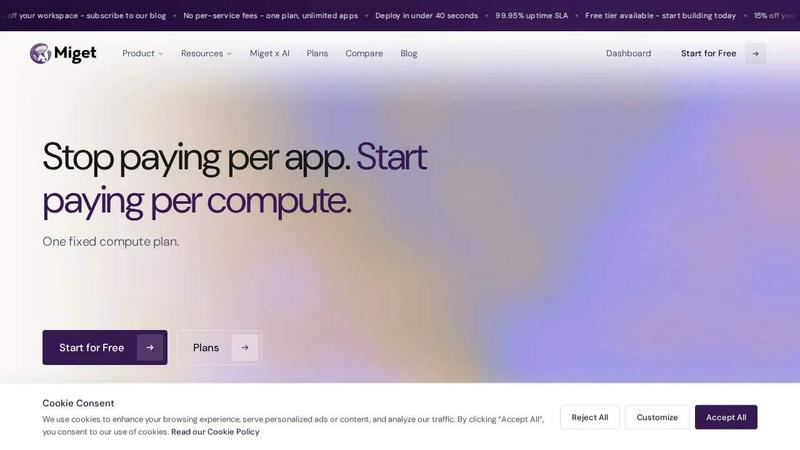
Miget – Stop paying per app. Start paying per compute.
Traditional PaaS platforms charge you for every app, database, and worker separately. Miget flips that model: pick a fixed compute plan, then deploy as many services as you want inside it.
- Unlimited apps, databases, and background workers per plan
- No per-service billing surprises
- Built on Kubernetes with full isolation between tenants
- Deploy from Git, GitHub, Registry with zero-config builds
- Managed PostgreSQL, Redis, and more
- Custom domains with automatic TLS
Whether you're running a single side project or a full production stack, you only pay for the compute you reserve—not the number of things you run on it.