3DAIStudio vs Nani
Side-by-side comparison to help you choose the right tool.

3DAIStudio
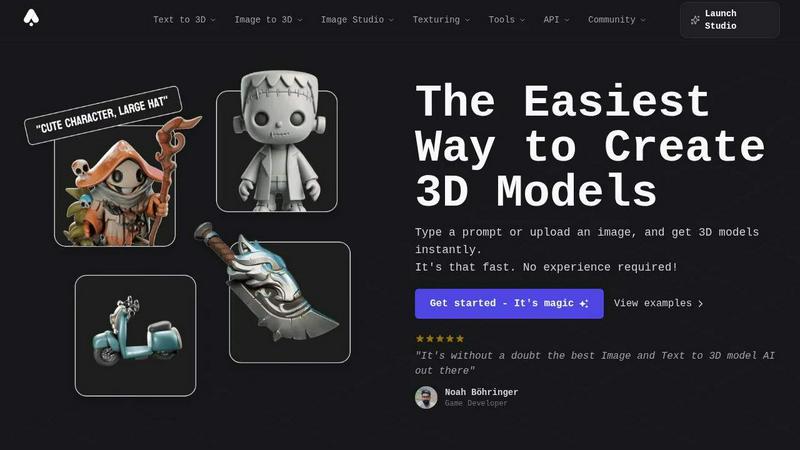
3DAIStudio instantly creates professional 3D models from text or images, making it the essential tool for every creator.
Last updated: April 4, 2026

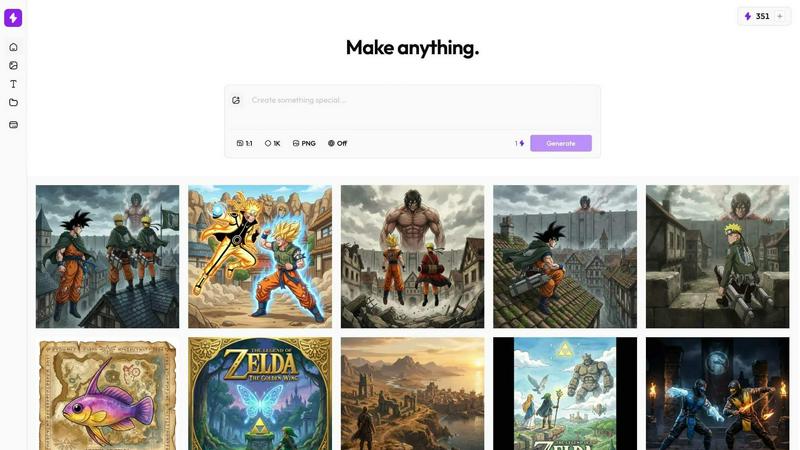
Nani empowers you to effortlessly generate and organize stunning AI images with reusable prompts for seamless.
Last updated: February 28, 2026
Visual Comparison
3DAIStudio
Nani
Feature Comparison
3DAIStudio
Text to 3D
This is the foundational feature that makes 3D creation accessible to all. Simply type a descriptive prompt, such as "realistic fantasy orc warrior," and the AI generates a complete, textured 3D model in seconds. It interprets natural language to create geometry, form, and detail, turning abstract ideas into tangible assets instantly. This feature is indispensable for rapid prototyping and conceptualizing designs directly from thought to 3D object.
Image to 3D
Transform any 2D image, sketch, photograph, or illustration into a fully realized 3D model. By uploading a reference image, the AI analyzes depth, perspective, and form to construct a three-dimensional asset. This is a critical tool for converting existing artwork, concept sketches, or real-world objects into usable 3D models, drastically speeding up the asset creation pipeline for games, AR, and 3D printing.
AI Texturing
Applying realistic, high-quality textures is a complex and tedious task made effortless with AI Texturing. This feature allows you to generate Physically Based Rendering (PBR) materials from text prompts or paint custom details directly onto your model. It ensures your assets have professional-grade surfaces—like metal, wood, or fabric—ready for rendering in any modern game engine or visualization software.
Quad-Remesh
For production-ready assets, clean topology is non-negotiable. The Quad-Remesh tool automatically optimizes mesh topology, reduces polygon count, and generates Levels of Detail (LODs). This essential feature fixes mesh issues, ensures models are animation-friendly and performance-optimized, and prepares them for final export without the need for manual, time-consuming retopology work.
Nani
Instant Image Generation
Nani enables users to create breathtaking images within seconds by simply typing a prompt and hitting generate. With customizable aspect ratios and resolutions available, users can produce images tailored to their specific needs without any visible watermarks.
Reusable Prompt Sets
One of Nani's standout features is the ability to group images and save prompts as reusable sets. This functionality allows users to maintain consistent characters, styles, and workflows across multiple generations, significantly enhancing productivity.
Organizational Tools
Nani offers robust organizational tools that let users create folders, filter by favorites, and bulk-select images. These features help keep your library tidy and manageable, making it easier to scale your workflow as your project demands grow.
Seamless Workflow Integration
Nani fosters a seamless workflow by allowing users to drag and drop images as references and share their creations via public links. This feature empowers others to recreate your work in their own accounts, promoting collaboration and inspiration among creative communities.
Use Cases
3DAIStudio
Game Development
For indie developers and AAA studios alike, 3DAIStudio is a game-changer. It accelerates the creation of characters, props, weapons, and environmental assets from concept art or text descriptions. This rapid generation allows for faster iteration, quicker prototyping of game worlds, and meeting tight production deadlines, making it an indispensable part of the modern game dev pipeline.
Film & Animation Pre-Visualization
In film and animation, visualizing concepts quickly is paramount. 3DAIStudio enables directors and artists to generate 3D models of characters, creatures, or set pieces from storyboards or written descriptions in minutes. This speeds up pre-visualization, helps in pitching ideas, and allows for dynamic scene blocking before committing to final, costly model production.
Product Design & Prototyping
Product designers can instantly create 3D models of new concepts from simple sketches or text briefs. This allows for rapid iteration on form factor, presentation of ideas to stakeholders in a realistic 3D space, and preparation of models for 3D printing or AR/VR product demonstrations, significantly shortening the design cycle.
Educational Content Creation
Educators and content creators can generate accurate 3D models of historical artifacts, scientific diagrams, or anatomical parts from images or descriptions. This makes creating engaging, interactive 3D learning materials for students or online courses fast and cost-effective, enhancing the educational experience with visual, manipulable assets.
Nani
Efficient Content Creation
Content creators can leverage Nani to streamline their image generation process, allowing them to produce high-quality visuals for blogs, social media, and marketing campaigns more efficiently.
Artistic Projects
Artists can utilize Nani to maintain consistency in their artwork by using reusable prompt sets, ensuring that characters and styles remain coherent across multiple pieces.
Design Prototyping
Designers can employ Nani for rapid prototyping, generating multiple design iterations quickly. This allows for faster feedback cycles and enhances collaboration with team members or clients.
Educational Purposes
Educators and students can use Nani to create engaging visual aids for presentations and projects, making complex topics easier to understand through compelling imagery.
Overview
About 3DAIStudio
3DAIStudio is an essential AI-powered toolkit that revolutionizes 3D content creation by transforming simple text prompts or 2D images into high-quality, production-ready 3D models in seconds. It eliminates the traditional, time-consuming barriers of manual modeling, texturing, and optimization, making professional-grade 3D asset generation accessible to everyone. This platform is a necessity for designers, game developers, filmmakers, product designers, and creatives of all skill levels who need to accelerate their workflow and bring ideas to life rapidly. Its core value proposition is unmatched speed and simplicity: you describe what you want or upload a reference image, and the AI handles the complex technical work, delivering textured, optimized models ready for use in major engines like Unity and Unreal. With over a million creators trusting it and thousands of assets generated daily, 3DAIStudio is not just a tool but a fundamental shift in digital creation, empowering users to iterate faster, meet deadlines, and unlock new creative possibilities without requiring prior 3D expertise.
About Nani
Nani is an essential workflow tool meticulously crafted to revolutionize the AI image generation experience, especially for those engaged in frequent and repetitive creative tasks. Unlike conventional AI image tools that focus on one-time creations, Nani stands out by streamlining the entire generation process. It eliminates the tediousness of constantly rewriting prompts and sifting through endless image feeds. Powered by Google's advanced Nano Banana Pro (Gemini) technology, Nani is an invaluable asset for artists, designers, and content creators who are eager to enhance their creative workflows. Its user-friendly interface is designed for efficiency, allowing users to generate stunning images in seconds. With features like reusable prompt sets and organized folders, Nani ensures that users can maintain consistency across their creative endeavors. This allows you to concentrate on your artistic vision rather than getting bogged down by administrative tasks. Experience the future of image generation with Nani, where creativity meets efficiency.
Frequently Asked Questions
3DAIStudio FAQ
What is 3DAIStudio?
3DAIStudio is an AI-powered software platform that allows you to generate high-quality, textured 3D models instantly from a text description or a 2D image. It includes a full suite of tools for texturing, mesh optimization, and image generation, designed to make professional 3D content creation fast and accessible to users of all skill levels.
Do I need 3D modeling experience to use it?
No, absolutely not. 3DAIStudio is built specifically to require no prior 3D modeling experience. The AI handles the complex technical work. You only need to provide a creative input—a text prompt or an image—and the platform generates a production-ready model for you, making it perfect for both beginners and professionals looking to speed up their workflow.
What formats can I export my 3D models in?
3DAIStudio exports production-ready assets with optimized meshes and PBR textures that are fully compatible with all major 3D engines and software, including Unity, Unreal Engine, Blender, Three.js, and more. The models are designed to be used immediately without requiring manual cleanup.
How fast can I generate a 3D model?
The generation process takes seconds. From the moment you submit a text prompt or upload an image, the AI begins creating your model. What traditionally takes days or hours of manual modeling, texturing, and optimization is accomplished in under a few minutes, allowing for incredibly fast iteration and concept development.
Nani FAQ
What types of images can I generate with Nani?
Nani allows you to generate a wide variety of images, from artistic illustrations to realistic mockups, catering to diverse creative needs and preferences.
Is there a learning curve for using Nani?
No, Nani is designed with a simple and intuitive interface that allows users to start creating immediately without any prior experience or extensive tutorials.
How does the credit-based billing work?
Nani operates on a credit-based system, where you pay only for the images you generate. Each generation costs approximately 30 cents for 1K or 2K resolution, ensuring affordability without subscriptions.
Are my credits transferable or do they expire?
Credits never expire, allowing you to use them at your convenience. You can also purchase bonus credits for larger orders, maximizing your creative potential without time constraints.
Alternatives
3DAIStudio Alternatives
3DAIStudio is an AI-powered content creation tool designed to quickly generate quality 3D models from simple text prompts or uploaded images. It belongs to the rapidly evolving category of AI-driven 3D asset generation, which is essential for modern designers, developers, and digital creators who need to produce visual content efficiently. Users often seek alternatives for several critical reasons. Budget constraints and specific pricing models are a primary necessity, as project needs vary widely. Others require different feature sets, such as particular export formats, animation capabilities, or integration with other essential software platforms. The need for a specific user experience, whether through a desktop application or a more robust web interface, also drives the search for other options. When evaluating an alternative, it is vital to prioritize your core project requirements. Key considerations must include the quality and style of the 3D output, the speed of generation, and the supported file formats for export. Assessing the cost structure against your expected usage and ensuring the platform aligns with your technical workflow are non-negotiable steps in making an informed decision.
Nani Alternatives
Nani is an innovative workflow tool that simplifies AI image generation, specifically designed for artists, designers, and content creators. By organizing prompts and images into reusable sets, Nani streamlines the creative process, allowing users to focus on their artistic endeavors rather than the repetitive tasks often associated with image generation. This tool is essential for those who require efficiency and consistency in their work. Users commonly seek alternatives to Nani for various reasons, such as pricing, specific feature sets, or compatibility with other platforms. The landscape of AI image generation tools is diverse, and individuals may have unique requirements that lead them to explore other options. When choosing an alternative, it's crucial to consider factors like usability, the extent of features offered, integration capabilities, and overall value for money to ensure the selected tool effectively meets creative needs.