
Agent to Agent Testing Platform vs SVG to 3D
Side-by-side comparison to help you choose the right tool.

Agent to Agent Testing Platform
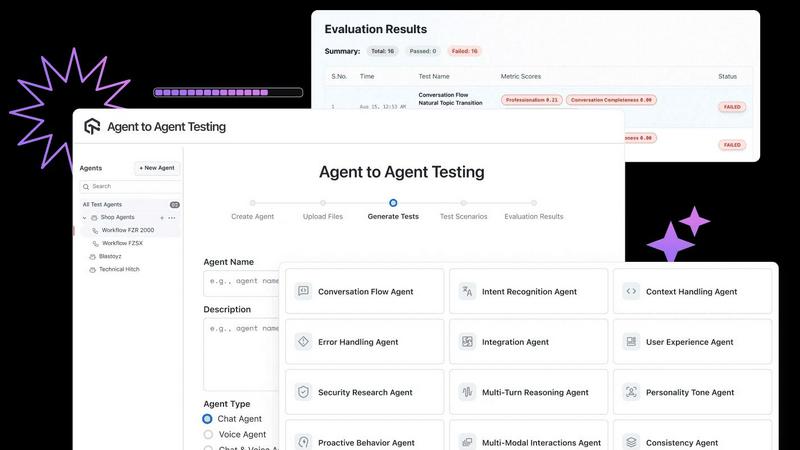
Validate AI agent behavior across chat, voice, and multimodal systems to ensure compliance and mitigate risks.
Last updated: February 28, 2026
SVG to 3D
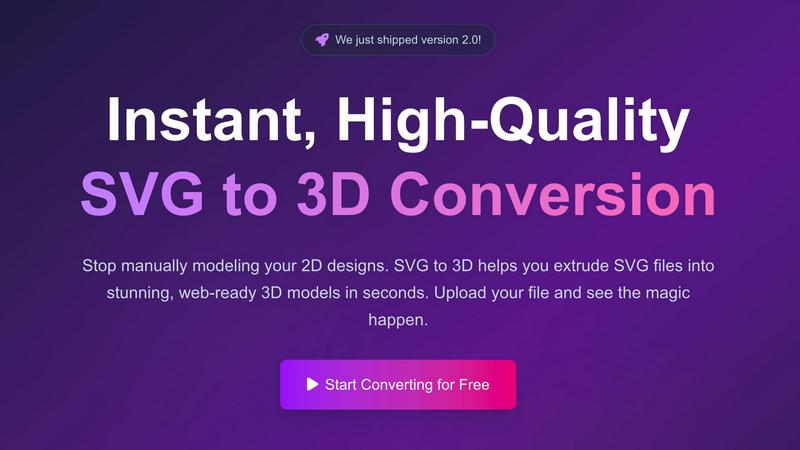
Instantly transform your SVG designs into high-quality 3D models with advanced controls and fast processing.
Last updated: February 28, 2026
Visual Comparison
Agent to Agent Testing Platform
SVG to 3D
Feature Comparison
Agent to Agent Testing Platform
Automated Scenario Generation
This feature automates the creation of diverse test scenarios for AI agents, enabling the simulation of various interactions across chat, voice, and phone channels. This ensures comprehensive testing to identify potential weaknesses.
True Multi-Modal Understanding
The platform supports testing beyond mere text inputs. Users can define requirements or upload documents containing images, audio, and video, enabling the evaluation of AI agents in real-world situations with multifaceted input types.
Autonomous Test Scenario Generation
Access a library of hundreds of pre-defined test scenarios or create custom scenarios tailored to specific needs. This feature allows users to assess how AI agents perform under various conditions, ensuring a thorough evaluation.
Diverse Persona Testing
Utilize a range of personas representing different end-user behaviors and needs during testing. By simulating interactions with personas such as International Caller or Digital Novice, the platform ensures that AI agents perform effectively for diverse user types.
SVG to 3D
One-Click GLB Export
SVG to 3D allows users to export their 3D models directly as GLB files in just one click. This feature is optimized for web developers, making it incredibly easy to integrate 3D models into websites using Three.js or React Three Fiber. It eliminates the need for complex setup, ensuring that your 3D designs can be implemented with minimal effort.
Advanced 3D Modeling Controls
Unlike basic converters, SVG to 3D offers advanced modeling features that let users adjust thickness, bevels, and apply realistic PBR materials. This level of control ensures a professional finish for your models, making it an essential tool for designers looking to achieve high-quality results.
Lightning-Fast Processing
The tool utilizes optimized algorithms that convert SVG files into 3D models in mere seconds. This speed is crucial for professionals who need to produce high-quality models quickly, allowing them to focus on creativity rather than waiting for lengthy processing times.
Privacy and Security
Your designs are processed locally in your browser whenever possible, ensuring that your files remain secure and private. This commitment to user privacy means you can work confidently without worrying about external server uploads, making it a trustworthy choice for professionals.
Use Cases
Agent to Agent Testing Platform
Quality Assurance for AI Products
Enterprises can leverage the platform to conduct rigorous quality assurance testing of their AI products, ensuring they meet performance standards before launching to the public.
Performance Evaluation of AI Agents
Organizations can evaluate the accuracy, empathy, and professionalism of their AI agents through detailed analysis and feedback, leading to improved user interactions and satisfaction.
Compliance and Risk Assessment
The platform helps businesses assess compliance with regulatory standards and internal policies by identifying potential risks and areas of concern in AI behavior, thus enhancing governance.
Continuous Improvement and Optimization
Through regression testing and risk scoring, companies can continuously refine their AI agents, prioritizing critical issues and optimizing overall performance for better user engagement.
SVG to 3D
Web Development
Web developers can easily convert SVG icons and logos into interactive 3D models, enhancing user experiences on their websites. The compatibility with popular frameworks like Three.js and Babylon.js makes integration seamless and efficient.
3D Printing
With support for clean STL exports, SVG to 3D is perfect for creators looking to turn their 2D designs into physical objects. This use case allows users to fabricate their logos, artwork, and custom parts without needing complex CAD software.
UI/UX Design
Designers can leverage the tool to add depth to their UI/UX projects by converting SVG elements into 3D models. This feature enables quick mock-ups and presentations that impress clients and stakeholders, showcasing designs in a more engaging manner.
Educational Purposes
Educators and students can utilize SVG to 3D for teaching and learning about 3D modeling and design principles. The straightforward interface and instant feedback make it an excellent resource for anyone looking to explore the world of 3D graphics.
Overview
About Agent to Agent Testing Platform
Agent to Agent Testing Platform is a pioneering AI-native quality assurance framework specifically designed for validating the behavior of AI agents in real-world scenarios. As AI systems become increasingly autonomous and complex, traditional quality assurance practices fall short in addressing the dynamic nature of these agents. This platform offers a comprehensive testing solution for various AI-driven interactions, including chatbots, voice assistants, and phone caller agents. By evaluating AI agents through full, multi-turn conversations, the platform helps enterprises ensure their AI systems are robust, reliable, and ready for production. The platform is particularly valuable for businesses that rely on AI technologies, as it uncovers potential failures, biases, and other critical metrics that can impact user experiences.
About SVG to 3D
SVG to 3D is a revolutionary online tool designed to effortlessly transform 2D SVG vector graphics into stunning, high-quality 3D models. Created with the specific aim of eliminating the need for heavy software like Blender or Cinema 4D, this tool caters to designers, developers, and 3D printing enthusiasts who seek a quick and efficient solution for 3D conversion. With its intuitive interface, users can upload SVG files and see their designs come to life in mere seconds. The main value proposition of SVG to 3D lies in its ability to provide advanced modeling options, allowing users to fine-tune details such as thickness and bevels, while also exporting models in web-optimized formats. Whether you are looking to enhance a website or prepare files for 3D printing, SVG to 3D streamlines the process, making it accessible and hassle-free.
Frequently Asked Questions
Agent to Agent Testing Platform FAQ
What types of AI agents can be tested using this platform?
The platform is designed to test various AI agents, including chatbots, voice assistants, and phone caller agents, across multiple interaction scenarios.
How does the platform ensure comprehensive testing?
The Agent to Agent Testing Platform automates scenario generation, allowing for diverse testing across chat, voice, and phone interactions, ensuring thorough coverage of potential use cases.
Can I create custom test scenarios?
Yes, users can access a library of pre-defined scenarios or create custom scenarios tailored to their specific requirements, providing flexibility in testing.
What metrics can be evaluated using this platform?
The platform evaluates key metrics such as bias, toxicity, hallucinations, effectiveness, accuracy, empathy, and professionalism, ensuring a holistic view of AI agent performance.
SVG to 3D FAQ
How does SVG to 3D work?
SVG to 3D works by allowing users to upload SVG files, which are then processed into 3D models using advanced algorithms. Users can adjust settings like thickness and materials before exporting the final model in various formats.
What file formats can I export my 3D model in?
You can export your 3D models in multiple formats, including GLB, GLTF, OBJ, and STL. This flexibility ensures compatibility with various applications and platforms, whether for web use or 3D printing.
Is there a limit on the size of SVG files I can upload?
Yes, SVG to 3D allows file uploads with a maximum size of 5 MB. This limit ensures optimal processing speed and performance for users, making it easier to work with standard-sized SVG files.
Do I need to create an account to use SVG to 3D?
No, you do not need to create an account to use SVG to 3D. The tool is designed to be accessible and user-friendly, allowing anyone to start converting their SVG files to 3D models without registration.
Alternatives
Agent to Agent Testing Platform Alternatives
The Agent to Agent Testing Platform is an innovative AI-native quality assurance framework that specializes in validating agent behavior across various communication channels, including chat, voice, phone, and multimodal systems. This platform stands out in the realm of AI assistants, addressing the unique challenges posed by increasingly autonomous AI systems that require more than traditional testing methods. Users often seek alternatives due to factors such as pricing, specific features that meet unique business needs, or the desire for a more tailored platform that aligns with their operational requirements. When exploring alternatives, it’s crucial to assess the platform's capability to handle multi-turn conversations effectively, the depth of its testing framework, and its ability to uncover edge cases and long-tail failures. Additionally, consider the scalability of the solution, its compliance with security standards, and the level of support provided to ensure successful implementation and continuous improvement.
SVG to 3D Alternatives
SVG to 3D is a specialized tool designed to transform 2D SVG vector graphics into high-quality 3D models. It falls under the category of AI Assistants and is particularly beneficial for web developers, designers, and 3D printing enthusiasts who require a quick and efficient solution for creating 3D representations of their designs. Users often seek alternatives due to factors such as pricing, the need for specific features, or compatibility with their preferred platforms. When choosing an alternative, it's essential to consider the ease of use, supported file formats, and the ability to export models for various applications, such as web integration or 3D printing. Additionally, the quality of the output and the level of customization available can significantly impact the decision-making process for users looking for the best fit for their needs.